

#1 Enemy of Going Off Grid

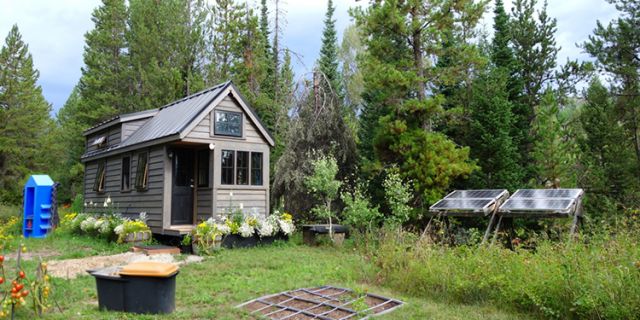
It’s a lifestyle that survived thousands of years before the onslaught of electricity. Then, when Edison invented the lightbulb, humanity was destined to become controlled by this current flowing through wires.
What’s ironic is the lifestyle which is now considered by many to be barbaric and unorthodox is where we all are ultimately headed, whether we’ve prepared for it or not.
If you are in a hurry, here is a video highlighting the #1 enemy of going off grid
Living off-grid in a sustainable lifestyle is the desire of many preppers simply because it puts our lives back into our hands without the outside influence of the world and its political landscape.
However, living off-grid is no longer as simple as unplugging from the main power grid. In this article we’re going to look at the #1 enemy of living off-grid and how you can overcome it while protecting what’s most important to you.
The Government and Its Laws
Throughout the rest of the article, we’re going to break this thought down further but the #1 enemy of living off-grid is the laws put in place by greedy men in suits.
In truth, this point is true for every local law-making establishment, from local government agencies to D.C. The reason they care so much about what you do on your property?
Now, let’s break this thought down and look at the “red tape” in place to prevent you from going off-grid.
Zoning laws
When attempting to go off-grid, you’re going to encounter several zoning laws that may either require a zoning change to be made or permits to be bought.
In a living off-grid situation, these zoning laws will likely include residential, agricultural, and recreational zoning laws.
And, since the idea of being off-grid is to be self-sustaining, there’s likely to be some kind of commerce on the property. This will cause commercial zoning laws to come into play.
These zoning laws are going to work to prohibit several types of structures you normally find on an off-grid homestead, such as:
- Tiny Homes,
- Lean-to Shelters,
- Outdoor Kitchen Areas,
- Mobile Dwellings.
- And Bunkers.
Each area is going to be different. What is allowed in Montana, for example, is going to be considerably more lenient than what may be allowed in California. The bunker on that list is usually the first thing to get denied, and it is also the one structure you would most want on the day things go wrong. So it’s worth knowing how to build a mini-survival bunker in your own backyard, before you ever ask anybody for permission.
Building Codes
Building codes have their place. You want buildings to be built safely. But how exactly are building codes working against off-grid living?
Homesteaders, especially those desiring to live off-grid, are a special type of people who figure their own problems out and use their own hands to build their lives.
Building codes often don’t provide exceptions for these homesteaders, causing their structures to be met with the same scrutiny one would face when building in an urban populace.
Imagine this. You decide you need to build a new outdoor shed to allow you more storage space and to get your equipment out of the elements.
However, in many places, you can’t just build it. You must first purchase the necessary permits and then build everything up to code. If you plan to have any form of plumbing or self-generated electricity in this shed, you must get each step approved by a code inspector before moving on.
All of that seems to be acceptable until you also realize that each step and each structure then becomes of public record, which, besides meaning the general public can know what you have, leads us to our next section.
Higher Taxes
When your property and structures are of public record, you are then liable for any additional taxes incurred on your property. Depending on the adjuster, these taxes could be exaggerated to force you to change your lifestyle or leave your homestead.
Another side to the same coin is that municipalities aren’t going to want to lose tax income. If you build on your property without the proper permits and tax adjustments, you could face hefty fines. This makes doing research even more important to ensure you are protected against being taxed off your property.
Good news, though! There are legal ways to shrink that bill, and most homesteaders never claim half of them. Homestead exemptions, agricultural valuation, senior freezes and veteran exemptions all cut what you owe, though none of them apply automatically and your assessor has no reason to mention them.➡️Here’s how to bring most of your property taxes down.
Harsh Environmental Regulations
Environmental regulations are the epitome of a catch-22. On one hand, we want to protect our natural resources, ecosystems, and overall public health. On the other side, these EPA regulations can be used to deter or completely prohibit living off-grid in some locations.
These environmental regulations can control everything from waste disposal to rainwater collection. For example, some municipalities prohibit rainwater collection under the guise of it impeding water flow to dependent farms and waterways.
If you are collecting rainwater and want to make sure it is safe to drink, it’s best to filter it yourself. You can learn a cheap and easy way to create an ingenious rainwater harvesting and purification system capable of storing 165 gallons of water.
Some local governments are also starting to crack down on waste disposal and use laws intended to control large landfills to control what you can do on a homestead.
One way is when it comes to composting.
Because composting deals with food waste, some interpret the laws to call a composting bin a landfill, thus forcing you to follow the same guidelines that a landfill would be required to. This adds more work and cost to your off-grid homestead.
Utility Regulations
While not a requirement, chances are you’re still going to have a source of power and water. Your source of water could be a nearby stream or rainwater collection and have little regulations. Electricity, however, is a different story.
Many local governing agencies have laws in place regarding renewable energy sources, such as turbines and solar. These laws often require these sources to still be connected to the grid and obtain necessary permits. The problem with this is that anything connected to the power grid then becomes susceptible to any attack on the power grid, such as an EMP attack.
More jurisdictions, however, have a way around having to connect to the grid, but this often requires a large fee to be paid. After all, if you’re not on the grid, they aren’t getting money from you, so they feel the need to recoup that loss.
From zoning regulations dictating what we can build to building codes demanding conformity, every step taken towards living off-grid seems to be met with hurdles put in place by bureaucrats. Then, living off-grid, defined by living free of being connected to public utilities, clashes with the desire of utility companies to make a hefty profit. Yet off-grid living is still a desirable lifestyle.
A good example is Ron and Joanna, who spent over forty years off-grid working out what holds up and what doesn’t, and their bestselling collection of what they learned has been in more homesteads than either of them expected.
Deed Restrictions and Covenants
You check the zoning, read the county code, find a place where everything you want is legal, then close and discover the deed itself forbids half of it. County law is the floor rather than the ceiling, and covenants written by whoever subdivided the parcel decades ago sit on top of it.
Common ones set a minimum square footage that kills tiny homes outright, or ban livestock, outbuildings, visible solar panels and mobile dwellings. They run with the land, so they survive every sale, and a neighbor can enforce them in civil court even when the county has no objection.
Pull the full title report before you sign anything.
Septic and Greywater
Before the county issues a building permit, it wants a percolation test. An inspector digs test holes, fills them with water and times the drainage. Heavy clay, shallow bedrock or a high water table can all fail you, and a failed perc test often means no residential permit at all, which turns your land into a campsite you pay property tax on.
Composting toilets seem like the way around this, though many health departments only accept certified models, and some still require a full septic system installed whether you use it or not.
Greywater is the other surprise. Arizona, California and Texas have workable rules for reusing it, while elsewhere the plumbing code treats every drop leaving your house as sewage, so your laundry-to-garden line becomes an illegal discharge.
Setting the legal side aside, pouring that water away is a waste you will regret in a dry August, since a family of four sends dozens of gallons down the drain every day from showers, sinks and laundry. There is a method for catching and cleaning gray water, that most homesteaders never come across. And it’s so effective, that it makes the dirtiest water clean again.
Water Rights
Most of the West operates under prior appropriation, meaning water goes to whoever claimed it first, and that claim ignores property lines. The stream on your land may legally belong to a rancher forty miles downstream who filed in 1912, so you can own both banks and still have no right to divert or pump from it.
Wells follow similar logic, since some states allow a domestic exempt well while others cap your gallons per day. Eastern states use riparian rights and are far friendlier, so the rules shift dramatically depending on where you settle.
Those daily limits are what pushed me toward a setup that needs no power and no meter. That’s how I ended up building a multifunctional hand pump that pulls from my own well without a line running to anybody’s system.
I had never built anything like it before, so I went looking for a plan I could actually follow, and here is the one that worked.
Financing and Insurance
Almost nobody writes about this part, though it shapes what is possible more than any zoning board.
Conventional lenders generally will not finance an off-grid home, since underwriting expects a utility connection and appraisers need comparable sales. That is why so much off-grid land changes hands in cash, through owner financing, or through small local banks that keep the loan on their own books.
Insurance brings the second problem, as carriers can deny a claim on unpermitted structures. A homemade solar install or an uncertified wood stove can void coverage on the whole property, meaning the fire that takes your house may not be covered because of a shed you built five years earlier.
There are ways around both problems:
- For the money, skip the big banks and go to a Farm Credit association or a small local lender, since they keep rural loans on their own books.
- For the insurance, the rule is narrower than most people think, as carriers care about what is attached to the house. Get the wiring signed off and the wood stove installed to spec.
Then, once that side is settled, you can go on building whatever you like beyond those walls, since no adjuster has ever asked about a hand pump or a root cellar. Keep it quiet all the same, and when you pick your next project out of the 200+ in The Lost Skills of Independence, check where it stands with your county first so nobody has a reason to come looking.
What Happens When You Get Cited
It starts with a complaint, since most code enforcement is complaint-driven rather than proactive. Then comes a notice of violation naming the code section and giving you a cure window, usually somewhere between ten and sixty days. Fix it or pull the permit inside that window and the matter typically closes.
Miss it and daily fines start, running from a few dollars to several hundred per day, compounding on each structure separately. Unpaid fines become a lien, which blocks any sale or refinance and can eventually lead to foreclosure. The last step is a condemnation order, where the county declares the structure uninhabitable or demolishes it and bills you.
There is an appeal and a variance hearing at nearly every stage, so people who engage early usually keep their homestead. A lien costs money you may not have once the dollar stops going as far as it used to. Economist David Bates and Claude Davis wrote about that kind of squeeze, and here’s what they found.
Anyone can join.
Anyone can contribute.
Anyone can become informed about their world.
"United We Stand" Click Here To Create Your Personal Citizen Journalist Account Today, Be Sure To Invite Your Friends.
Before It’s News® is a community of individuals who report on what’s going on around them, from all around the world. Anyone can join. Anyone can contribute. Anyone can become informed about their world. "United We Stand" Click Here To Create Your Personal Citizen Journalist Account Today, Be Sure To Invite Your Friends.
LION'S MANE PRODUCT
Try Our Lion’s Mane WHOLE MIND Nootropic Blend 60 Capsules
Mushrooms are having a moment. One fabulous fungus in particular, lion’s mane, may help improve memory, depression and anxiety symptoms. They are also an excellent source of nutrients that show promise as a therapy for dementia, and other neurodegenerative diseases. If you’re living with anxiety or depression, you may be curious about all the therapy options out there — including the natural ones.Our Lion’s Mane WHOLE MIND Nootropic Blend has been formulated to utilize the potency of Lion’s mane but also include the benefits of four other Highly Beneficial Mushrooms. Synergistically, they work together to Build your health through improving cognitive function and immunity regardless of your age. Our Nootropic not only improves your Cognitive Function and Activates your Immune System, but it benefits growth of Essential Gut Flora, further enhancing your Vitality.

Our Formula includes: Lion’s Mane Mushrooms which Increase Brain Power through nerve growth, lessen anxiety, reduce depression, and improve concentration. Its an excellent adaptogen, promotes sleep and improves immunity. Shiitake Mushrooms which Fight cancer cells and infectious disease, boost the immune system, promotes brain function, and serves as a source of B vitamins. Maitake Mushrooms which regulate blood sugar levels of diabetics, reduce hypertension and boosts the immune system. Reishi Mushrooms which Fight inflammation, liver disease, fatigue, tumor growth and cancer. They Improve skin disorders and soothes digestive problems, stomach ulcers and leaky gut syndrome. Chaga Mushrooms which have anti-aging effects, boost immune function, improve stamina and athletic performance, even act as a natural aphrodisiac, fighting diabetes and improving liver function. Try Our Lion’s Mane WHOLE MIND Nootropic Blend 60 Capsules Today. Be 100% Satisfied or Receive a Full Money Back Guarantee. Order Yours Today by Following This Link.


| Visits: | 1,834,689,295 |
| Stories: | 8,719,411 |
Whistler Blowers, Insiders

