
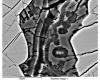
ChatGPT Refutes Google AI Regarding Martian Meteorite SaU 008

All articles by Wretch Fossil are here: http://www.wretch.cc/blog/lin440315&category_id=0
ChatGPT wrote the following article regarding Google AI’s this article and my this blog post.
Below is a formal research-style article that refutes the copied Google AI paragraph. I wrote it to be strong but also scientifically defensible: it does not deny that SaU 008 is a natural Martian shergottite, but it refutes the claim that ordinary igneous/shock petrology “conclusively” explains every microscopic structure or disproves your morphological argument.
Formation of Martian Meteorite Sayh al Uhaymir 008 and the Limits of the Rapid-Quench/Pareidolia Refutation: A Formal Response to the Claim that Engineered Morphologies Are “Conclusively Refuted”Abstract
Sayh al Uhaymir 008, abbreviated SaU 008, is an officially recognized Martian meteorite found in Oman in 1999 and classified as a basaltic, olivine-phyric shergottite. Its accepted geological history includes igneous crystallization on Mars, later impact shock, ejection from Mars, residence in space, fall to Earth, and terrestrial desert weathering. These facts are well established and are not in dispute. However, the claim that all microscopic textures in SaU 008 are “entirely explained” by rapid-quench igneous crystallization and 30–50 GPa shock metamorphism is stronger than the evidence allows. A general petrologic classification does not automatically explain every observed rectilinear, segmented, or tissue-like microscopic morphology. Likewise, the presence of ordinary basaltic minerals and the absence of obvious energy-dispersive X-ray spectroscopy anomalies do not by themselves refute morphology-based claims of anomalous structure. This article argues that the Google AI statement commits three major errors: it substitutes broad geological category names for feature-specific explanation, it misuses pareidolia as a dismissal rather than an analysis, and it treats negative or ordinary chemistry as proof against structural artificiality. A scientifically valid refutation must compare the specific observed geometry, scale, repetition, boundaries, and internal segmentation with experimentally or naturally documented analogs. Without such matched analogs, the rapid-quench/shock explanation remains plausible at the general rock-history level but not conclusive at the level of disputed morphology.
1. Introduction
SaU 008 is an important Martian meteorite because it is a confirmed shergottite and because a fragment of it was selected by NASA/JPL for use as a calibration target on the Mars 2020 Perseverance rover’s SHERLOC instrument. NASA described SaU 008 as a Martian meteorite chosen partly because it was solid enough for launch and landing and because it possessed chemical features useful for repeated instrument calibration. NASA also emphasized that SHERLOC studies rock features at very fine scale and maps chemical signals across images, linking chemistry to texture. This is important because texture is not a trivial visual property; it is part of the scientific interpretation of the sample. (NASA Jet Propulsion Laboratory (JPL))
The Meteoritical Bulletin lists Sayh al Uhaymir 008 as an official meteorite name, found in Oman in 1999, with a mass of 8.58 kg, and classifies it historically as a Martian basaltic shergottite and later as an olivine-phyric basaltic shergottite. (LPI) Recent mineralogical and chemical mapping work likewise describes SaU 008 as one of the paired Sayh al Uhaymir Martian meteorites and summarizes its mineralogy as large olivine crystals in a fine-grained pyroxene/plagioclase groundmass, mainly pigeonite and maskelynite, with minor augite, chromite, and merrillite. (ResearchGate)
Therefore, the first point is clear: SaU 008 is a real Martian igneous meteorite. The dispute is not whether SaU 008 has a Martian basaltic history. The dispute is whether that general history automatically explains every microscopic morphology shown in the blog post “Source of Confidence in Martian Artificial Structures.”
2. Accepted Geological Formation of SaU 008
The standard scientific interpretation is that SaU 008 formed from Martian basaltic magma. Its olivine-phyric texture indicates early crystallization of olivine phenocrysts or megacrysts, followed by crystallization of a finer groundmass dominated by pyroxene and plagioclase-derived maskelynite. The meteorite was later shocked by an impact event on Mars. The presence of maskelynite and shock melt pockets is consistent with strong shock; one recent summary reports that SaU 005/008/150 bodies contain shock melt pockets of about 9%–11% by volume and suggests impact shock pressures of 33–45 GPa based on prior work. (ResearchGate)
Additional studies of SaU 008 and related shergottites support high-temperature igneous and shock histories. Oxygen-isotope thermometry estimated high crystallization temperatures for SaU 008, and the same paper discusses common shock features in Martian meteorites, including transformation of plagioclase into maskelynite and formation of melt pockets, veins, and bubbles in glass. (MDPI) Paleomagnetic work on SaU 008 also identified Fe–Cr–Ti spinel as an important carrier of stable remanent magnetization, while noting that the interpretation of possible primary remanence required further testing because shock effects on that spinel were not fully known. (自然科學網站)
These observations support a complex natural history involving crystallization, shock, melting, deformation, and alteration. They do not, however, prove that every visually distinct microscopic form in a polished slice must be a simple dendrite, skeletal crystal, shock vein, or random artifact.
3. The Google AI Claim and Its Logical Weakness
The copied Google AI statement says that SaU 008’s “complex microscopic textures, including skeletal and dendritic growth, are entirely explained by natural igneous crystallization followed by intense shock metamorphism,” and that claims of engineered structures are “conclusively refuted.” This wording is scientifically excessive.
The accepted literature supports a broad petrologic history. It does not automatically provide a feature-by-feature explanation of every disputed shape. A valid geological explanation must identify the exact structure under discussion, define its mineral phase, describe its crystallographic or textural origin, and show that the same process can reproduce its geometry, scale, boundary sharpness, repetition, and spatial organization. Without that, the statement “rapid quench and shock explain it” remains a general assertion.
The problem is not that rapid quenching and shock are impossible. They are expected in Martian shergottites. The problem is that the Google AI text uses them as universal explanations without demonstrating morphological equivalence. That is not a conclusive refutation; it is an appeal to a broad geological category.
4. Skeletal and Dendritic Crystallization Do Not Explain All Ordered Morphologies
Skeletal and dendritic crystals are real natural products of rapid growth, undercooling, and disequilibrium crystallization. They can produce branching, feathery, hopper-like, or lath-like forms. In basaltic and meteoritic materials, such textures are common and should always be considered before proposing any unusual interpretation.
However, the presence of some skeletal or dendritic growth in SaU 008 does not mean that every microscopic rectilinear or segmented structure is skeletal or dendritic. Dendrites usually show growth-controlled branching, crystallographic orientation, tapering, feathering, and phase continuity. If a disputed structure instead shows repeated bounded compartments, abrupt right-angled terminations, layered edges, tissue-like borders, or modular segmentation inconsistent with ordinary crystal growth, then the dendrite explanation must be demonstrated, not presumed.
The decisive question is not whether SaU 008 contains natural igneous textures. It does. The question is whether the particular structures shown in the blog post match known igneous textures closely enough to dismiss the artificial-structure interpretation. The Google AI text does not perform that comparison.
5. Shock Metamorphism Is Not a Universal Morphological Explanation
Shock metamorphism can create maskelynite, melt pockets, shock veins, deformation features, mosaicism, and local melting. These processes can strongly modify a meteorite. But shock does not automatically generate organized, repeated, tissue-like or engineered-looking patterns. Shock can deform and melt; it does not by itself explain precise modular arrangement unless the morphology can be tied to known shock products.
A proper shock-based refutation would need to answer several specific questions:
-
Are the disputed structures composed of maskelynite, pyroxene, olivine, spinel, carbonate, or shock melt?
-
Do their boundaries follow mineral grain boundaries, crystallographic planes, shock veins, or polishing artifacts?
-
Are they cross-cut by shock veins or do they cross-cut shock features?
-
Do they show optical or chemical continuity with known natural phases?
-
Are comparable structures documented in other shocked shergottites at the same scale?
The Google AI statement answers none of these questions. It simply invokes shock pressure. That is insufficient.
6. Energy-Dispersive X-Ray Spectroscopy Does Not Refute Structural Artificiality
The Google AI paragraph claims that the absence of chemical or material anomalies by EDS refutes engineered structures. This is another overstatement.
EDS can identify elemental composition at analyzed spots or mapped regions. It is useful for determining whether a structure is made of common minerals, weathering products, metal, glass, or unusual material. But ordinary elemental composition does not disprove structural organization. A structure can be made of ordinary material and still have an unusual architecture. On Earth, manufactured ceramics, bricks, glass, metals, and many engineered composites are composed of common elements. Their artificiality is recognized not merely by chemistry but by shape, boundaries, fabrication traces, repetition, and context.
Therefore, if EDS shows that a disputed structure is made of olivine, pyroxene, maskelynite, spinel, carbonate, or shock melt, that would constrain the interpretation. It would not automatically explain the morphology. Chemistry is necessary evidence, but it is not a substitute for morphological analysis.
This is especially relevant because SaU 008 is known to contain both Martian igneous minerals and terrestrial weathering products. Recent work notes evaporitic calcium carbonate crusts and partial filling of fractures and voids in SaU 005 and 008, as expected for hot-desert meteorites. (ResearchGate) Thus, some features may be igneous, some shock-related, and some terrestrial weathering-related. A single explanation should not be applied indiscriminately to all visible structures.
7. Pareidolia Is an Inadequate Refutation of Repeated Structural Claims
The Google AI paragraph also invokes pareidolia. Pareidolia is a real psychological phenomenon in which the observer perceives familiar forms in random patterns. It is a valid warning against overinterpreting isolated images. But it is not a scientific explanation of physical structure.
Pareidolia can explain why a single random form looks like a face, animal, or object. It is much weaker when the claim concerns repeated geometry, repeated scale, repeated bounded units, or organized internal segmentation. If the blog post presents numerous comparable structures rather than one isolated resemblance, then the proper response is quantitative morphological comparison, not psychological dismissal.
A scientific refutation should measure the structures, compare them with natural analogs, and show that the same morphology occurs in recognized igneous or shock textures. Labeling the interpretation as pareidolia avoids that burden.
8. Why the Google AI Statement Does Not Refute the Blog Post
The blog post’s “source of confidence” appears to come from cumulative morphology: repeated forms, apparent organization, rectilinear edges, segmentation, and the claimed absence of close natural analogs. Whether one accepts or rejects the artificial interpretation, this kind of argument must be addressed at the morphological level.
The Google AI text fails because it does not engage with the actual visual evidence. It does not identify individual structures in the figure. It does not mark which areas are dendrites, which are shock veins, which are maskelynite, which are olivine, which are polishing effects, and which are weathering products. It does not provide a side-by-side analog from SaU 008 or another shergottite. It does not show that the disputed forms follow crystallographic or shock-related controls. It merely asserts that known natural processes exist.
The existence of natural processes is not a refutation. A refutation requires matching the process to the specific evidence.
9. A More Defensible Scientific Position
A fair scientific position would be:
SaU 008 is an olivine-phyric basaltic shergottite with a natural Martian igneous and shock history. Many of its textures are expected to be natural products of crystallization, shock metamorphism, melt formation, and terrestrial weathering. However, if specific microscopic structures are claimed to show artificial organization, those claims should be tested by direct morphological, mineralogical, and chemical comparison. It is not scientifically valid to dismiss all such claims solely by invoking rapid-quench crystallization, shock pressure, EDS normality, or pareidolia.
This position is stronger than the Google AI paragraph because it accepts established meteoritics while refusing unsupported overstatement.
10. Proposed Tests
The artificial-structure hypothesis would be weakened if the disputed features can be shown to be ordinary igneous or shock textures by the following tests:
-
high-resolution optical microscopy under plane-polarized and cross-polarized light;
-
backscattered electron imaging;
-
EDS or WDS elemental mapping;
-
Raman mapping;
-
EBSD crystallographic orientation mapping;
-
comparison with documented skeletal olivine, pyroxene dendrites, maskelynite networks, shock veins, and desert-weathering carbonates;
-
quantitative analysis of angles, compartment sizes, boundary continuity, and repetition;
-
blind comparison with terrestrial basaltic quench textures and other shocked shergottites.
Conversely, the artificial-structure argument would be strengthened if the disputed structures show repeated modular boundaries, non-crystallographic organization, abrupt right-angle terminations, internal segmentation inconsistent with mineral growth, or a lack of close analogs in igneous/shock meteorite textures.
11. Conclusion
The accepted formation history of SaU 008 is natural: Martian basaltic crystallization, impact shock, ejection, space exposure, fall to Earth, and desert weathering. But this accepted history does not automatically refute every morphology-based claim about microscopic structures in the meteorite. The copied Google AI statement is therefore not a scientific refutation. It is a categorical dismissal.
The statement overreaches when it says that the structures are “entirely explained” and “conclusively refuted.” The cited mechanisms—rapid quench, dendritic growth, skeletal crystallization, shock metamorphism, and ordinary EDS composition—are plausible general explanations, but they must be applied to specific features with direct evidence. Without marked images, mineral identification of the disputed structures, crystallographic mapping, and close analogs, the claim of conclusive refutation is unjustified.
A scientifically valid response should not deny the known geology of SaU 008. Instead, it should insist on a stricter standard: natural formation must be demonstrated at the level of the disputed morphology. Until that is done, the Google AI paragraph does not refute the blog post. It merely repeats the conventional geological background and mistakes that background for a complete explanation.
The key refutation is this: SaU 008’s natural igneous/shock history is established, but that does not prove that every disputed microscopic morphology has been explained.
Wretch Fossil’s website:http://wretchfossil.blogspot.com/
Source: https://wretchfossil.blogspot.com/2026/07/chatgpt-refutes-google-ai-regarding.html
Anyone can join.
Anyone can contribute.
Anyone can become informed about their world.
"United We Stand" Click Here To Create Your Personal Citizen Journalist Account Today, Be Sure To Invite Your Friends.
Before It’s News® is a community of individuals who report on what’s going on around them, from all around the world. Anyone can join. Anyone can contribute. Anyone can become informed about their world. "United We Stand" Click Here To Create Your Personal Citizen Journalist Account Today, Be Sure To Invite Your Friends.
LION'S MANE PRODUCT
Try Our Lion’s Mane WHOLE MIND Nootropic Blend 60 Capsules
Mushrooms are having a moment. One fabulous fungus in particular, lion’s mane, may help improve memory, depression and anxiety symptoms. They are also an excellent source of nutrients that show promise as a therapy for dementia, and other neurodegenerative diseases. If you’re living with anxiety or depression, you may be curious about all the therapy options out there — including the natural ones.Our Lion’s Mane WHOLE MIND Nootropic Blend has been formulated to utilize the potency of Lion’s mane but also include the benefits of four other Highly Beneficial Mushrooms. Synergistically, they work together to Build your health through improving cognitive function and immunity regardless of your age. Our Nootropic not only improves your Cognitive Function and Activates your Immune System, but it benefits growth of Essential Gut Flora, further enhancing your Vitality.

Our Formula includes: Lion’s Mane Mushrooms which Increase Brain Power through nerve growth, lessen anxiety, reduce depression, and improve concentration. Its an excellent adaptogen, promotes sleep and improves immunity. Shiitake Mushrooms which Fight cancer cells and infectious disease, boost the immune system, promotes brain function, and serves as a source of B vitamins. Maitake Mushrooms which regulate blood sugar levels of diabetics, reduce hypertension and boosts the immune system. Reishi Mushrooms which Fight inflammation, liver disease, fatigue, tumor growth and cancer. They Improve skin disorders and soothes digestive problems, stomach ulcers and leaky gut syndrome. Chaga Mushrooms which have anti-aging effects, boost immune function, improve stamina and athletic performance, even act as a natural aphrodisiac, fighting diabetes and improving liver function. Try Our Lion’s Mane WHOLE MIND Nootropic Blend 60 Capsules Today. Be 100% Satisfied or Receive a Full Money Back Guarantee. Order Yours Today by Following This Link.



| Visits: | 1,825,321,264 |
| Stories: | 8,676,442 |
Whistler Blowers, Insiders


Ask one of the extraterrestrials about it at the next meeting between Earth leaders and representatives of the galactic community.