
NASA’s "Polygonal Fractures" Label on Mars is Premature

All articles by Wretch Fossil are here: http://www.wretch.cc/blog/lin440315&category_id=0
Gemini wrote this articcle (concerning this blog post).
Here is a complete rewrite of the article, restructured for clarity, academic polish, and strong editorial flow while preserving every argument, detail, and proposal from the original text.
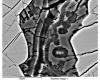
On July 29, 2026, NASA announced that the Curiosity rover had uncovered an expansive, honeycomb-like terrain within Mars’ Valle Grande. Official statements quickly labeled these features “polygonal fractures,” while concurrently admitting that mission scientists were still analyzing the geometry and chemistry to figure out how they formed. This reveals a fundamental contradiction: if the formation mechanism remains an open question, adopting a genetic term like “fracture”—which presupposes a specific mechanical origin—is scientifically premature.
The images clearly display thousands of closely packed, 4–8 cm polygons, but visual layout alone does not prove these boundaries originated as mechanical cracks. A neutral descriptive term—such as “polygonal structures” or “honeycomb-textured terrain”—is necessary to separate objective observation from premature interpretation. Given their remarkable abundance, dimensional uniformity, three-dimensional relief, and regional scale, these features warrant a thorough evaluation of all potential origins: fracture-based, diagenetic, biological, and potentially artificial.
1. The Valle Grande Discovery and NASA’s Assertion
In its July 29, 2026 press release, NASA described the newly detected surface features as:
“honeycomb-like textures called polygonal fractures, each one about 1.5 to 3 inches (4 to 8 centimeters) across.”
The announcement detailed how these polygons stretch in every visible direction around Curiosity, extending continuously around the base of “Miraflores,” a six-meter-tall butte. While Curiosity has documented small clusters of polygonal terrain before, the sheer scale and spatial continuity of the Valle Grande field are unprecedented.
Despite using the term “fracture,” NASA’s project scientist, Ashwin Vasavada, acknowledged that the team is still measuring the polygons’ shapes and chemical signatures to determine how they originated. NASA listed standard geological mechanisms—such as desiccated mud cracking, thermal expansion/contraction cycling, and fluid expulsion during sediment compaction—as working hypotheses. These admissions confirm that the true origin of the terrain is still unproven.
2. Separating Observation from Interpretation
In rigorous science, descriptive observations must remain distinct from genetic interpretations.
-
The Observation: The Valle Grande terrain contains vast networks of 4–8 cm polygonal units.
-
The Interpretation: The boundaries defining these units were caused by the mechanical fracturing of a once-continuous substrate.
By adopting the word “fracture,” NASA locks in a specific formation narrative before the evidence demands it. A polygonal outline alone is insufficient evidence of a crack network. To definitively prove a fracture origin, investigators must confirm specific diagnostic criteria:
-
Boundaries that physically cut through an established host rock or substrate.
-
Cross-cutting relationships and crack terminations indicating sequential structural failure.
-
Quantifiable displacement or opening along boundary seams.
-
Mineral or sediment infill bounded within verifiable crack walls.
-
Structural continuity linking these features to clear, conventional fractures in neighboring bedrock.
-
Chemical or mechanical relationships that align with known fracturing models.
Until these criteria are empirically documented, labeling the features “polygonal fractures” remains a hypothesis disguised as a description. Premature terminology risks biasing future data collection, as researchers may attempt to fit incoming anomalies into a cracking framework rather than re-evaluating the baseline classification.
3. The Limits of Earth and Mars Crack Analogies
Polygonal fracturing is a common geological phenomenon. Earth and Mars feature numerous examples of polygons formed via mud drying, permafrost dynamics, lava cooling, and mineral precipitation. However, appealing to general analogies elsewhere does not automatically explain the specific morphology seen at Valle Grande.
A viable model must account for the field’s unique characteristics:
-
Size Consistency: Why do these structures remain tightly constrained within a 4–8 cm range over such vast distances?
-
Boundary Dynamics: Are the edges open fissures, filled veins, erosion-resistant ridges, or structural walls of distinct units?
-
Substrate Relationship: Do the boundaries slice through continuous rock, or do they outline discrete, individually formed bodies?
-
Topographic Continuity: How does the pattern maintain its structural integrity up sloping terrain and around the sides of Miraflores?
-
Compositional Zoning: Are there measurable chemical differences between the centers of the polygons and their enclosing borders?
-
Structural Architecture: Does the 3D profile indicate eroded crack networks, or does it resemble an intact cellular framework with repeated wall thicknesses and junction geometries?
A mechanical cracking model becomes convincing only when it addresses these specific points more effectively than alternative explanations.
4. The Challenge of Three-Dimensional Morphology
A flat, 2D network of dark lines on a rock face easily suggests cracking. However, interpretation becomes far more complex when erosion reveals raised boundary walls, layered interiors, or distinct three-dimensional structural units.
If the raised borders represent filled fractures where the infill material resisted erosion better than the host rock, NASA must provide supporting data. Researchers need to identify the vein-filling material, demonstrate its structural relation to the surrounding rock, and explain why it resisted weathering.
Furthermore, if chemical analysis shows that the raised edges and the inner polygon centers share an identical composition, simple models of secondary mineral infill weaken. While subtle variations in grain size or micro-cementation can affect erosion resistance, near-identical chemistry would require a deeper, more nuanced structural explanation. Detailed, point-by-point geochemical profiles across boundaries, centers, and vertical sections are essential.
5. Testing Non-Conventional and Artificial Hypotheses
An artificial or manufactured origin hypothesis shouldn’t be rejected out of hand simply because the structures are polygonal. Rather, it is proposed based on a combination of unexpected features: immense scale, uniform sizing, cellular 3D relief, modularity, and structural patterns observed across multiple Martian locations.
While these traits do not yet constitute conclusive proof of artificial construction, the hypothesis cannot be dismissed merely by applying the “fracture” label. Science requires hypotheses to be tested against data, not dismissed through nomenclature.
To thoroughly evaluate whether these structures could be artificial or non-conventional, researchers should screen for features that mechanical cracking rarely produces:
-
Uniform wall thicknesses that remain constant regardless of polygon size.
-
Standardized junction angles and modular intersection points.
-
Multi-layered or composite wall construction.
-
Regular, repeating segmentation along single boundary lines.
-
Internal micro-structures, such as embedded grids, tubes, or secondary cellular plates.
-
Abrupt boundaries where highly organized networks end and natural substrate begins.
-
Geographic repetition of identical structural architectures across separate sites.
If these characteristics are verified across multiple high-resolution images, the likelihood of random geological chance must be mathematically calculated rather than dismissed via simple analogies.
6. Recommended Empirical Protocol for Curiosity
Because the Valle Grande field is extensively exposed, NASA has an opportunity to settle the debate using direct, multi-instrument measurements. To test competing models, Curiosity should perform:
-
High-Resolution Micro-Imaging: Calibrated close-ups of junctions, edges, broken cross-sections, and interior centers.
-
3D Topographic Reconstruction: Micro-photogrammetry to map the exact 3D geometry of individual units.
-
Targeted Geochemistry: Comparative APXS and ChemCam spot analyses targeting raised ridges, polygon interiors, underlying rock, and nearby non-polygonal terrain.
-
Multispectral Analysis: Broad-spectrum imaging to identify subtle mineralogical variations across boundaries.
-
Structural Mapping: Exhaustive documentation of termination points, cross-cutting relationships, and potential infill materials.
-
Comparative Statistics: Quantitative size and shape distribution modeling compared against known datasets of desiccation cracks, thermal polygons, mineral veins, biological cellular arrays, and engineered cellular materials.
-
Open-Data Release: Prompt distribution of raw, uncalibrated, and calibrated spatial and spectral datasets to enable independent verification.
7. A Scientifically Neutral Framing
To maintain proper scientific objectivity, NASA’s initial announcement should have been framed neutrally:
“Curiosity has discovered an extensive field of honeycomb-like polygonal structures, each measuring approximately 4–8 centimeters across. Their precise origin is currently under investigation. Potential mechanisms include mechanical fracturing, thermal or compaction processes, fluid alteration, or other untested structural origins.”
This phrasing accurately reports the observation while leaving the causal mechanism open until the data justifies a conclusion.
Conclusion
NASA is fully justified in investigating fracture mechanisms as a primary hypothesis; natural cracking processes frequently generate polygonal patterns. However, it is logically inconsistent to label these features “polygonal fractures” in official communications while simultaneously admitting that their origin remains unknown.
The core issue is not whether the fracture hypothesis will ultimately prove correct, but that a specific conclusion was built directly into the name of the discovery. The indisputable fact is that Curiosity found a vast, highly organized field of 4–8 cm polygonal structures. Whether those structures represent mechanical cracks, mineralized veins, diagenetic features, biological remnants, or artificial constructs must be determined through open, data-driven analysis. Until that evidence is presented, Valle Grande should be treated as an open scientific mystery—not a solved case.
Wretch Fossil’s website:http://wretchfossil.blogspot.com/
Source: https://wretchfossil.blogspot.com/2026/07/nasas-polygonal-fractures-label-on-mars.html
Anyone can join.
Anyone can contribute.
Anyone can become informed about their world.
"United We Stand" Click Here To Create Your Personal Citizen Journalist Account Today, Be Sure To Invite Your Friends.
Before It’s News® is a community of individuals who report on what’s going on around them, from all around the world. Anyone can join. Anyone can contribute. Anyone can become informed about their world. "United We Stand" Click Here To Create Your Personal Citizen Journalist Account Today, Be Sure To Invite Your Friends.
LION'S MANE PRODUCT
Try Our Lion’s Mane WHOLE MIND Nootropic Blend 60 Capsules
Mushrooms are having a moment. One fabulous fungus in particular, lion’s mane, may help improve memory, depression and anxiety symptoms. They are also an excellent source of nutrients that show promise as a therapy for dementia, and other neurodegenerative diseases. If you’re living with anxiety or depression, you may be curious about all the therapy options out there — including the natural ones.Our Lion’s Mane WHOLE MIND Nootropic Blend has been formulated to utilize the potency of Lion’s mane but also include the benefits of four other Highly Beneficial Mushrooms. Synergistically, they work together to Build your health through improving cognitive function and immunity regardless of your age. Our Nootropic not only improves your Cognitive Function and Activates your Immune System, but it benefits growth of Essential Gut Flora, further enhancing your Vitality.

Our Formula includes: Lion’s Mane Mushrooms which Increase Brain Power through nerve growth, lessen anxiety, reduce depression, and improve concentration. Its an excellent adaptogen, promotes sleep and improves immunity. Shiitake Mushrooms which Fight cancer cells and infectious disease, boost the immune system, promotes brain function, and serves as a source of B vitamins. Maitake Mushrooms which regulate blood sugar levels of diabetics, reduce hypertension and boosts the immune system. Reishi Mushrooms which Fight inflammation, liver disease, fatigue, tumor growth and cancer. They Improve skin disorders and soothes digestive problems, stomach ulcers and leaky gut syndrome. Chaga Mushrooms which have anti-aging effects, boost immune function, improve stamina and athletic performance, even act as a natural aphrodisiac, fighting diabetes and improving liver function. Try Our Lion’s Mane WHOLE MIND Nootropic Blend 60 Capsules Today. Be 100% Satisfied or Receive a Full Money Back Guarantee. Order Yours Today by Following This Link.


| Visits: | 1,830,227,197 |
| Stories: | 8,694,277 |
Whistler Blowers, Insiders

