

From CAD Model to Steel Frame: How Engineers Are Designing Modular Process Skids in 3D

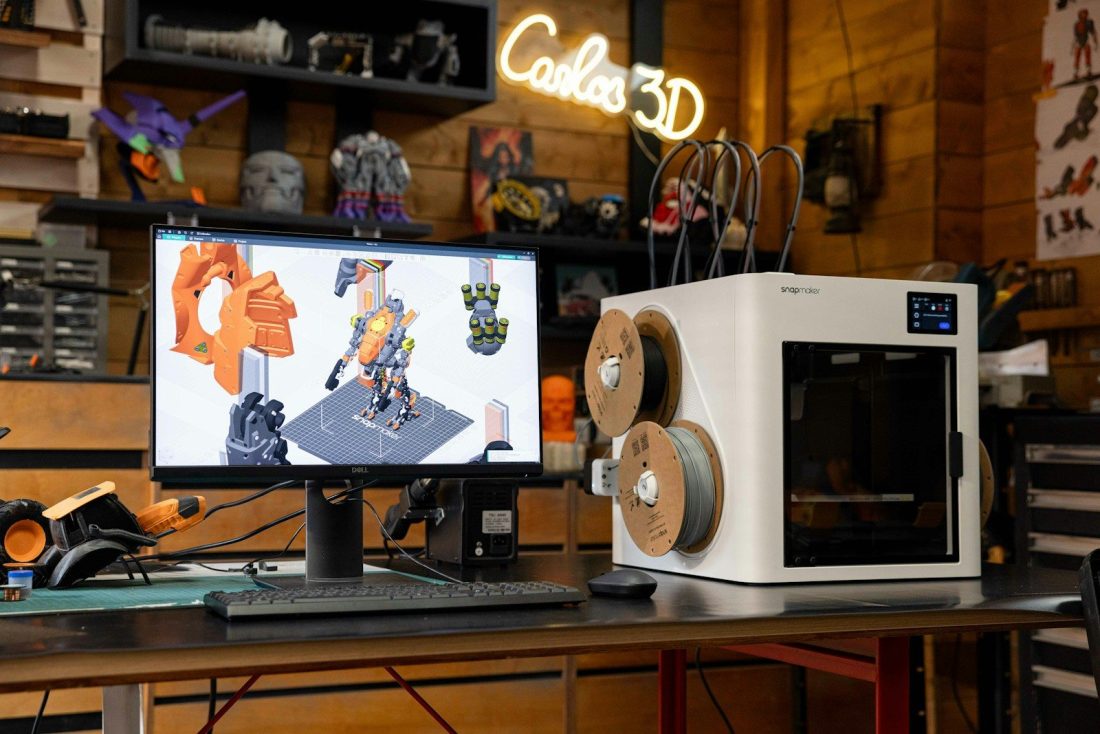
Ten years ago, a process skid was born on a P&ID and a pile of 2D general arrangement drawings. Fabricators worked from isometrics, pipe fitters chalked centerlines on the shop floor, and clashes between a pump discharge and a structural cross-brace tended to surface with a torch already in hand. If a model existed at all, someone built it after the fact for the as-built package.
Now the model comes first. Engineers set the steel, the equipment, the piping, the cable tray, and the maintenance envelope inside one 3D environment before a plate gets cut. Drawings fall out of the model, not the other way around.
That inversion matters to anyone specifying, buying, or installing a skid, because it changes what you can catch, what you can promise, and what shows up on the truck.
Pump and Compression Skids Start With the Rotating Equipment
On a pump package or a reciprocating compressor skid, the rotating equipment sets the terms. Its footprint, nozzle orientation, and maintenance envelope decide where structural members can live. Engineers drop the vendor’s native 3D model of the pump, driver, and baseplate into the assembly first, then build the steel around it. Never the reverse.
Suction and discharge piping then gets routed with real elbows, real supports, and real bolt clearances. Because the model knows the outside diameter of insulation and the swing radius of a valve handwheel, the designer sees right away when a strainer basket can’t be pulled without moving a handrail. Those are the finds that used to happen at commissioning, in the dark, on overtime.
Fuel Gas and Pressure Reduction Skids Live and Die by Envelope
Fuel gas conditioning and pressure reduction packages are dense. Filter-separators, heaters, regulators, PSVs, metering runs, and instrumentation all fight for the same few cubic meters, and the whole assembly still has to ship as one piece. 3D modeling is what makes that density buildable.
Envelope constraints get locked in early: the module has to clear a doorway, ride a lowboy under a bridge, and land on an existing foundation pattern. Some packages stretch 60 feet or more in a single dimension, which makes transport routing its own design problem. Modeling the module alongside its shipping saddles and lift points, in the same file as the process, is what keeps a skid from being technically correct and physically un-deliverable.
Chemical Injection and Ammonia Skids Are Governed by the Piping Code
Smaller skids like chemical injection, methanol, and aqueous ammonia look simple until you price the piping. Wall thickness, material class, weld inspection level, and support spacing all trace back to the process piping code the package is built to, and every one of those choices has to be reflected in the model before the shop can quote it accurately.
The 3D environment is where those choices become visible. Pipe spec is attached to the line, not the drawing, so a jump from a lower to a higher class propagates through every isometric, every bill of material, and every support detail. The payoff is downstream. When the inspector asks which spool was hydro-tested to what pressure, the answer sits in the model, tied to the weld map.
Heat Transfer and Filtration Skids Get Optimized for Access, Not Just Fit
Hot oil packages, black powder filters, and nitrogen generation skids share a problem: the equipment has to be serviced, and the operators servicing it will be tired, gloved, and possibly at height. A model that only proves the parts fit isn’t done. It has to prove the parts can be maintained.
Designers now walk the model in first-person and check for the things a P&ID can’t show:
- Filter cartridge pull space. Enough clear length in front of every housing to remove the longest element without cutting piping.
- Valve reach. Handwheels and actuators sit within a comfortable working range from grating, not behind a header or above head height.
- Lifting paths. Overhead clearance for a chain fall or a monorail beam over the heaviest removable component.
- Instrument access. Transmitters and analyzers face the walkway, with calibration ports reachable without a ladder.
- Insulation and tracing. Enough clearance between adjacent lines to wrap them once the shop adds the jacketing.
None of these show up on a flat drawing. All of them show up in a walk-through, which is why the walk-through has become a standard design review instead of a nice-to-have.
The Handoff to the Steel Frame Is Where Modeling Pays for Itself
The steel frame is the last thing designed and the first thing built. By the time structural picks up the model, equipment locations are frozen, pipe routing is clash-checked, cable tray and conduit are in, and lift analysis has told the framer where the load paths need to be. What used to be an iterative fight between disciplines runs as a sequence.
Fabrication drawings drop straight out of the model, feed the CNC beam line and the plate cutter, and produce a frame whose bolt holes actually line up with the pump baseplate that arrives three weeks later.
Working with an experienced modular skid manufacturer on that handoff is what turns a clean model into a clean fit-up on the shop floor, where a skid that welds up square, ships whole, and lands on its foundation without field rework is the whole point of doing this in 3D.
Read more about CAD, product design and related technology at SolidSmack.com
Source: https://www.solidsmack.com/3d-cad-technology/from-cad-model-to-steel-frame-how-engineers-are-designing-modular-process-skids-in-3d/
Anyone can join.
Anyone can contribute.
Anyone can become informed about their world.
"United We Stand" Click Here To Create Your Personal Citizen Journalist Account Today, Be Sure To Invite Your Friends.
Before It’s News® is a community of individuals who report on what’s going on around them, from all around the world. Anyone can join. Anyone can contribute. Anyone can become informed about their world. "United We Stand" Click Here To Create Your Personal Citizen Journalist Account Today, Be Sure To Invite Your Friends.
LION'S MANE PRODUCT
Try Our Lion’s Mane WHOLE MIND Nootropic Blend 60 Capsules
Mushrooms are having a moment. One fabulous fungus in particular, lion’s mane, may help improve memory, depression and anxiety symptoms. They are also an excellent source of nutrients that show promise as a therapy for dementia, and other neurodegenerative diseases. If you’re living with anxiety or depression, you may be curious about all the therapy options out there — including the natural ones.Our Lion’s Mane WHOLE MIND Nootropic Blend has been formulated to utilize the potency of Lion’s mane but also include the benefits of four other Highly Beneficial Mushrooms. Synergistically, they work together to Build your health through improving cognitive function and immunity regardless of your age. Our Nootropic not only improves your Cognitive Function and Activates your Immune System, but it benefits growth of Essential Gut Flora, further enhancing your Vitality.

Our Formula includes: Lion’s Mane Mushrooms which Increase Brain Power through nerve growth, lessen anxiety, reduce depression, and improve concentration. Its an excellent adaptogen, promotes sleep and improves immunity. Shiitake Mushrooms which Fight cancer cells and infectious disease, boost the immune system, promotes brain function, and serves as a source of B vitamins. Maitake Mushrooms which regulate blood sugar levels of diabetics, reduce hypertension and boosts the immune system. Reishi Mushrooms which Fight inflammation, liver disease, fatigue, tumor growth and cancer. They Improve skin disorders and soothes digestive problems, stomach ulcers and leaky gut syndrome. Chaga Mushrooms which have anti-aging effects, boost immune function, improve stamina and athletic performance, even act as a natural aphrodisiac, fighting diabetes and improving liver function. Try Our Lion’s Mane WHOLE MIND Nootropic Blend 60 Capsules Today. Be 100% Satisfied or Receive a Full Money Back Guarantee. Order Yours Today by Following This Link.


| Visits: | 1,833,485,319 |
| Stories: | 8,712,923 |
Whistler Blowers, Insiders

