

How Chatbots Improve Customer Service , And Where an AI Customer Service Agent Makes the Real Difference

A customer sends a message at 11:47 pm about a billing error. No agent is available. They wait until morning, then have to re, explain the whole situation from scratch. That friction , the wait, the repetition, the frustration , is exactly what an AI customer service agent is built to eliminate.
Chatbots have matured far beyond scripted FAQs. Modern AI, powered agents understand intent, pull from live data, resolve complex queries, and hand off smoothly to humans when a situation needs it. This guide explains how they work , and why the companies using them well are seeing real gains in speed, satisfaction, and cost.
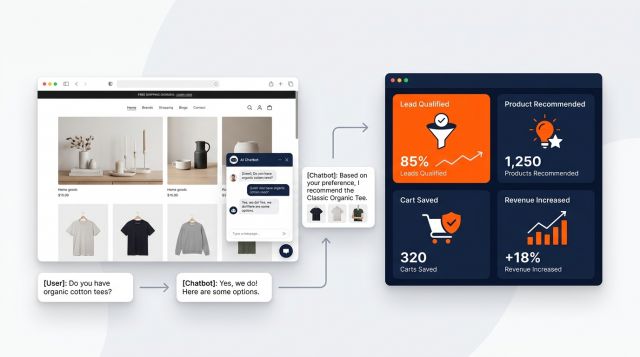
What an AI Customer Service Agent Actually Does
At its core, an AI customer service agent is a system that reads what a customer says, figures out what they want, and either answers it or routes it correctly. That sounds simple , but the difference between a good agent and a frustrating chatbot comes down to whether it truly understands context.
Older rule, based chatbots followed fixed scripts. If a customer’s message didn’t match a preset keyword, they got a dead end. AI agents use natural language processing (NLP) to interpret meaning, not just words. A customer typing “my order hasn’t shown up” and one typing “where’s my package?” are asking the same thing , and a well, trained agent knows that.
The practical result: more queries resolved without human involvement, shorter wait times, and a support team that spends its time on the issues that genuinely need a human.
The Most Concrete Ways Chatbots Improve Customer Service
It helps to get specific. Here are the areas where AI agents consistently move the needle:
24/7 availability without 24/7 staffing
Customer questions don’t follow business hours. An AI agent handles after, hours queries instantly , no queues, no voicemail, no waiting until Monday. For e, commerce brands with global customers, this alone can cut missed conversations significantly.
Consistent answers at scale
When a human agent is tired, rushed, or uncertain, answer quality varies. An AI agent gives the same accurate answer whether it’s handling 3 conversations or 3,000. For businesses going through a product launch or a service disruption, that consistency prevents misinformation from spreading across support threads.
Faster first response and resolution
First response time is one of the biggest drivers of customer satisfaction scores. An AI agent responds in seconds , not minutes. For common queries like order status, password resets, appointment scheduling, or return policies, it often resolves the issue in that same first exchange.
Reducing agent burnout by handling repetitive volume
Support agents often spend 60–70% of their time on questions they’ve answered hundreds of times before. An AI agent absorbs that volume, freeing your team to focus on escalations, retention conversations, and complex complaints , the work that actually requires human judgment.
Seamless escalation with full context
One of the biggest complaints customers have about chatbots is having to repeat themselves when transferred to a human. A well, integrated AI customer service agent passes the full conversation history to the live agent , no re, explaining, no frustration reset. The human picks up exactly where the AI left off.
Where Businesses Get This Wrong
Not every chatbot deployment is a success story. A lot of the frustration people associate with bots comes from implementation mistakes, not the technology itself.
The most common error is deploying an AI agent that can’t recognize when it’s out of its depth. If a customer is expressing serious frustration or asking something outside the agent’s training, the worst outcome is the bot looping them back to the same unhelpful answer. That damages trust faster than a slow human response ever would.
The second mistake is treating the bot as a cost, cutting shortcut rather than a service improvement. When the goal is purely to deflect tickets rather than actually help customers, users feel it. The questions the bot can’t answer are often the most important ones , and if there’s no clear escalation path, those customers leave.
A third issue is neglecting the knowledge base behind the agent. An AI customer service agent is only as good as the information it can access. If your product documentation is outdated, your returns policy isn’t in the system, or your FAQ hasn’t been updated in two years, the agent will confidently give wrong answers , which is worse than giving no answer at all.
Industries Where AI Customer Service Agents Perform Best
Some business types see dramatically higher impact than others. The common thread is high query volume with a significant portion of repetitive, structured questions.
E, commerce and retail , order tracking, returns, sizing questions, delivery updates. These are high, volume, time, sensitive queries that AI handles well.
SaaS and tech products , password resets, billing queries, account changes, onboarding help. Most of these have defined answers that don’t change , perfect for an AI agent.
Financial services , balance inquiries, fraud alerts, card disputes, branch hours. Here, accuracy matters more than almost anything else. A well, trained agent with the right guardrails performs reliably.
Healthcare administration , appointment booking, insurance verification, prescription refills. Not clinical advice , but the administrative layer around it is ripe for AI support.
Travel and hospitality , booking changes, cancellations, loyalty point queries. Customers in this space often need answers urgently , delays cost them real money.
A Practical Example: What Good Looks Like
Picture a mid, size home services company covering several neighborhoods across a metro area. Every morning, the support inbox fills with the same questions: “Is someone coming today?” “Can I reschedule my Wednesday appointment?” “What’s included in the basic plan?”
Without an AI agent, two people field these all day , and by afternoon they’re behind. An AI customer service agent handles appointment confirmations, reschedules, and plan breakdowns automatically. It knows the customer’s service history from the CRM. It responds in under 10 seconds. By the time a human gets involved, it’s only for the genuinely unusual cases.
That same team now handles double the inbound volume with the same two people , and customer satisfaction scores went up because wait times dropped.
How to Measure Whether Your AI Agent Is Actually Working
Deploying an AI customer service agent without tracking the right metrics is how businesses end up with bots that feel useless but look fine on a dashboard. These are the numbers that tell the real story:
Containment rate , what percentage of conversations the AI resolves without human intervention. Anything above 70% for common query types is strong. Well, tuned agents in structured environments hit 85% and above.
First contact resolution (FCR) , whether the customer’s issue was actually solved in one interaction. High containment with low FCR means the bot is deflecting, not helping.
Customer satisfaction score (CSAT) on bot, handled conversations , many businesses track CSAT only for human, handled tickets. You need to know whether customers leaving an AI conversation are satisfied, not just whether they stopped sending messages.
Escalation rate and escalation reason , knowing how often the AI transfers to a human is useful. Knowing why is essential. If the same category of question keeps triggering escalation, that’s a gap to close in your knowledge base.
Average handle time before escalation , if the AI is spending six exchanges on something before giving up, that’s a bad experience. Escalation should happen early when it’s going to happen at all.

Common Questions About AI Customer Service Agents
Will customers know they’re talking to a bot?
Most of the time, yes , and that’s fine. Transparency builds trust. The experience that frustrates customers isn’t knowing they’re talking to an AI, it’s knowing they’re stuck in a loop that can’t help them. A well, designed agent that solves the problem quickly is received well regardless of whether it’s human or not.
How long does it take to set up an AI customer service agent?
For a basic deployment handling common queries, most platforms can be configured in a few weeks. A more sophisticated agent with CRM integration, live order data, and nuanced escalation logic typically takes two to three months to build and test properly. Rushing this phase is how bad deployments happen.
What happens when the AI gets something wrong?
All AI agents make mistakes. The key is how the system handles them. Good agents recognize low, confidence situations and escalate or ask a clarifying question rather than guessing. You should also have a feedback loop where incorrect responses are flagged and used to retrain or update the knowledge base.
Can an AI agent handle emotional or upset customers?
This is one of the clearest limits of current AI. An agent can detect sentiment and escalate when frustration signals are high , which is the right move. It should not attempt to de, escalate a genuinely distressed customer on its own. Routing upset customers to humans quickly, with context, is the right design decision.
Is an AI customer service agent worth it for a small business?
It depends on your query volume and how much time your team spends answering the same questions repeatedly. If you’re handling fewer than 50 customer messages a day and most are unique, an AI agent may not justify the setup cost. If a meaningful chunk of your support load is repetitive and predictable, even a simple AI agent can free up significant time.
Ready to See What an AI Agent Can Do for Your Support Team?
The businesses getting the most out of AI customer service agents aren’t the ones with the biggest budgets. They’re the ones who mapped their most common customer questions, built a clean knowledge base, and deployed something that actually solves those problems well.
If you want to explore what this looks like for your specific setup , your volume, your query types, your team , talk to us. We’ll walk through what makes sense and what doesn’t before anything gets built.
Anyone can join.
Anyone can contribute.
Anyone can become informed about their world.
"United We Stand" Click Here To Create Your Personal Citizen Journalist Account Today, Be Sure To Invite Your Friends.
Before It’s News® is a community of individuals who report on what’s going on around them, from all around the world. Anyone can join. Anyone can contribute. Anyone can become informed about their world. "United We Stand" Click Here To Create Your Personal Citizen Journalist Account Today, Be Sure To Invite Your Friends.
LION'S MANE PRODUCT
Try Our Lion’s Mane WHOLE MIND Nootropic Blend 60 Capsules
Mushrooms are having a moment. One fabulous fungus in particular, lion’s mane, may help improve memory, depression and anxiety symptoms. They are also an excellent source of nutrients that show promise as a therapy for dementia, and other neurodegenerative diseases. If you’re living with anxiety or depression, you may be curious about all the therapy options out there — including the natural ones.Our Lion’s Mane WHOLE MIND Nootropic Blend has been formulated to utilize the potency of Lion’s mane but also include the benefits of four other Highly Beneficial Mushrooms. Synergistically, they work together to Build your health through improving cognitive function and immunity regardless of your age. Our Nootropic not only improves your Cognitive Function and Activates your Immune System, but it benefits growth of Essential Gut Flora, further enhancing your Vitality.

Our Formula includes: Lion’s Mane Mushrooms which Increase Brain Power through nerve growth, lessen anxiety, reduce depression, and improve concentration. Its an excellent adaptogen, promotes sleep and improves immunity. Shiitake Mushrooms which Fight cancer cells and infectious disease, boost the immune system, promotes brain function, and serves as a source of B vitamins. Maitake Mushrooms which regulate blood sugar levels of diabetics, reduce hypertension and boosts the immune system. Reishi Mushrooms which Fight inflammation, liver disease, fatigue, tumor growth and cancer. They Improve skin disorders and soothes digestive problems, stomach ulcers and leaky gut syndrome. Chaga Mushrooms which have anti-aging effects, boost immune function, improve stamina and athletic performance, even act as a natural aphrodisiac, fighting diabetes and improving liver function. Try Our Lion’s Mane WHOLE MIND Nootropic Blend 60 Capsules Today. Be 100% Satisfied or Receive a Full Money Back Guarantee. Order Yours Today by Following This Link.


| Visits: | 1,813,343,055 |
| Stories: | 8,656,990 |
Whistler Blowers, Insiders

