

Why a Fallout Shelter Is Only as Safe as the Air Inside It

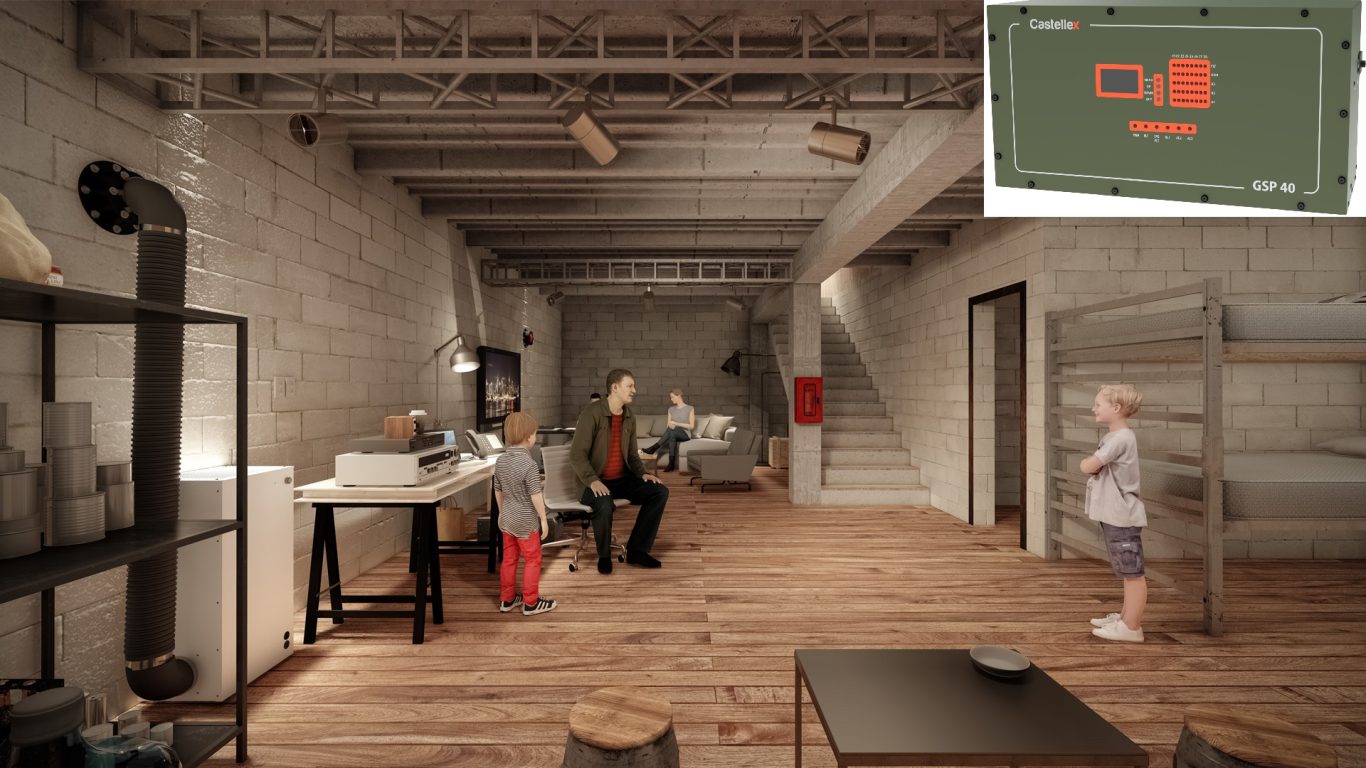
Walk into a well-built fallout shelter and the first things you notice are the thick walls, the steel door and the stored supplies. What you cannot see is the system that keeps the space livable. A shelter without a reliable way to deal with the air is closer to a sealed box than a refuge, and a properly specified fallout shelter ventilation setup is what separates the two. This guide explains why air handling deserves as much attention as structure, and what to look for when planning it.
Structure Protects Against Blast. Air Handling Protects Against Everything Else.
People tend to picture shelters as defences against explosions and collapse, so they invest in reinforced concrete and heavy doors. That is reasonable, and structure matters. Yet many of the hazards that make shelters worth considering do not arrive as a shockwave. Radioactive dust, chemical agents and biological contaminants travel on the air.
If outside air is drawn into a shelter without treatment, those hazards come inside with it. A strong structure that leaks contaminated air offers a false sense of security. The occupants may be safe from debris and still be breathing exactly what they were trying to avoid.
The Three Jobs a Shelter Air System Must Do
A good system has to do three things at once.
Supply fresh air. People inside a closed space use up oxygen and build up carbon dioxide. Without a managed supply, conditions deteriorate over hours, regardless of how clean the air outside is.
Filter what comes in. Fine particulate filters capture dust and aerosols. Activated carbon removes many chemical vapours. Used together, they are designed to remove specified contaminants before the air reaches the occupants.
Keep outside air out. Positive pressure holds the shelter slightly above the surrounding air pressure, so leaks push outward. This reduces the chance that unfiltered air seeps in through seals, joints and cable entries.
Everyday Use and Emergency Use
Few families can justify a room that sits empty for years, so most private shelters are designed to double as something else, such as a cellar, storage room or workshop. That means the ventilation has to be comfortable and quiet in normal conditions, then switch to filtered mode when needed.
Dual-mode designs make this practical. The same unit that circulates fresh air day to day can be set to a protective mode during an incident. This also helps maintenance, because a system that runs regularly is more likely to be checked and found working.
Power Cannot Be Assumed
Serious emergencies often involve infrastructure failure. A shelter air system that depends entirely on mains electricity is only as dependable as the grid. For that reason, it is worth looking for equipment with backup batteries and a manual option, such as a hand-crank generator, so that airflow does not stop if the lights do.
The Air550HCC Ultimate from Castellex follows this approach for private shelters, combining everyday ventilation, electronic controls, battery backup and a manual generator. Those details illustrate the sort of questions to ask any supplier: what happens when the power goes, and how simple is it to operate?
Scaling Up for Groups and Businesses
Families are not the only ones who think about shelter. Businesses near industrial sites, and organisations with a duty of care to their staff, sometimes consider shared protective spaces. Higher-capacity NBC air filtration for bomb shelters is built for this kind of use, where several families or a group of employees share one space and need more airflow.
Capacity depends on how many people the shelter holds, how large it is and how airtight it is. A competent supplier or engineer should work through those numbers instead of guessing. It is also worth remembering that no shelter replaces evacuation plans, staff training or ordinary workplace safety compliance.
Questions to Ask Before You Buy
- Has the equipment been independently tested, and by whom?
- Is it designed for the shelter’s size and number of occupants?
- Does it work as normal ventilation as well as protective filtration?
- What are the backup options if mains power fails?
- How easy is it to install, maintain and replace filters?
- Where is it made, and what support is available?
Frequently Asked Questions
Why does a fallout shelter need filtered air? Radioactive particles, chemical agents and biological contaminants can enter through ventilation. Filtered, pressurised air reduces the amount of unfiltered air reaching the occupants.
What does positive pressure do? It keeps the air pressure inside the shelter slightly higher than outside, so small leaks push air out rather than letting contaminated air in.
Can a shelter be used for other purposes day to day? Yes. Many private shelters double as cellars, storage rooms or utility spaces. Dual-mode ventilation makes this practical by supplying normal airflow until protective filtration is needed.
Does filtration replace oxygen management? No. Filters clean air but do not generate oxygen or remove all carbon dioxide. Shelter design must still account for occupancy, ventilation rates and airtightness.
Is a shelter air system a legal requirement for UK employers? No. Employers must assess workplace risks and take reasonable steps to protect staff, but installing a protective shelter is not generally required. It can be considered as an additional precaution where specific risks justify it.
Anyone can join.
Anyone can contribute.
Anyone can become informed about their world.
"United We Stand" Click Here To Create Your Personal Citizen Journalist Account Today, Be Sure To Invite Your Friends.
Before It’s News® is a community of individuals who report on what’s going on around them, from all around the world. Anyone can join. Anyone can contribute. Anyone can become informed about their world. "United We Stand" Click Here To Create Your Personal Citizen Journalist Account Today, Be Sure To Invite Your Friends.
LION'S MANE PRODUCT
Try Our Lion’s Mane WHOLE MIND Nootropic Blend 60 Capsules
Mushrooms are having a moment. One fabulous fungus in particular, lion’s mane, may help improve memory, depression and anxiety symptoms. They are also an excellent source of nutrients that show promise as a therapy for dementia, and other neurodegenerative diseases. If you’re living with anxiety or depression, you may be curious about all the therapy options out there — including the natural ones.Our Lion’s Mane WHOLE MIND Nootropic Blend has been formulated to utilize the potency of Lion’s mane but also include the benefits of four other Highly Beneficial Mushrooms. Synergistically, they work together to Build your health through improving cognitive function and immunity regardless of your age. Our Nootropic not only improves your Cognitive Function and Activates your Immune System, but it benefits growth of Essential Gut Flora, further enhancing your Vitality.

Our Formula includes: Lion’s Mane Mushrooms which Increase Brain Power through nerve growth, lessen anxiety, reduce depression, and improve concentration. Its an excellent adaptogen, promotes sleep and improves immunity. Shiitake Mushrooms which Fight cancer cells and infectious disease, boost the immune system, promotes brain function, and serves as a source of B vitamins. Maitake Mushrooms which regulate blood sugar levels of diabetics, reduce hypertension and boosts the immune system. Reishi Mushrooms which Fight inflammation, liver disease, fatigue, tumor growth and cancer. They Improve skin disorders and soothes digestive problems, stomach ulcers and leaky gut syndrome. Chaga Mushrooms which have anti-aging effects, boost immune function, improve stamina and athletic performance, even act as a natural aphrodisiac, fighting diabetes and improving liver function. Try Our Lion’s Mane WHOLE MIND Nootropic Blend 60 Capsules Today. Be 100% Satisfied or Receive a Full Money Back Guarantee. Order Yours Today by Following This Link.


| Visits: | 1,837,639,421 |
| Stories: | 8,733,802 |
Whistler Blowers, Insiders

