

Biofertilizer Plant Manufacturer: A Practical Guide to Biofertilizer Production

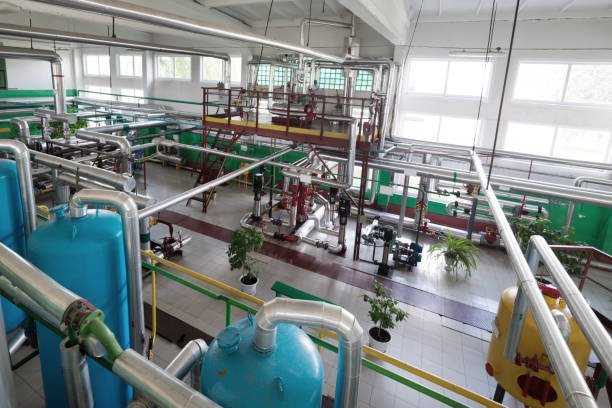
Biofertilizers are increasingly used in modern agriculture as a way to support soil fertility and plant growth through beneficial microorganisms. Unlike conventional chemical fertilizers, biofertilizers contain living microorganisms that can help improve nutrient availability and support healthier soil conditions. As interest in sustainable farming continues to grow, businesses and agricultural organizations are exploring reliable solutions for biofertilizer production.
A Biofertilizer Plant Manufacturer plays an important role in this process by providing the equipment, plant design, and production systems required to manufacture different types of biofertilizers.
What Is a Biofertilizer Plant?
A biofertilizer plant is a production facility designed for the cultivation, processing, formulation, and packaging of microbial-based agricultural products. Depending on the type of biofertilizer being produced, the facility may include fermentation systems, culture preparation equipment, mixing units, storage tanks, filling machines, and packaging systems.
The overall plant configuration depends on factors such as the microorganisms being used, production capacity, formulation type, and intended application.
Why Is Biofertilizer Production Important?
Healthy soil is essential for productive agriculture. Continuous cultivation, nutrient depletion, and changes in soil conditions can affect agricultural productivity. Biofertilizers are used in various farming practices to introduce beneficial microorganisms that can contribute to nutrient cycling and soil biological activity.
Common microorganisms used in biofertilizer production include bacteria and fungi associated with processes such as nitrogen fixation, phosphate solubilization, and improved nutrient availability.
A properly designed production plant helps manufacturers maintain suitable processing conditions and achieve consistent product quality.
Role of a Biofertilizer Plant Manufacturer
Choosing an experienced Biofertilizer Plant Manufacturer is an important consideration when planning a production facility. A manufacturer may provide solutions covering plant layout, equipment selection, fermentation systems, processing units, and other supporting infrastructure.
The requirements can vary considerably between small-scale research facilities and commercial production plants. Therefore, plant design should be based on the specific production objectives rather than using the same configuration for every application.
Important factors may include:
- Required production capacity
- Type of microorganisms
- Fermentation requirements
- Liquid or carrier-based formulation
- Mixing and processing requirements
- Storage conditions
- Packaging requirements
- Quality-control procedures
- Available production space
Major Equipment Used in a Biofertilizer Plant
Different biofertilizer plants use different equipment depending on their manufacturing process. Some commonly required systems include:
1. Fermentation Equipment
Fermenters or bioreactors provide controlled conditions for microbial cultivation. Temperature, aeration, agitation, and other parameters may need to be monitored depending on the microorganism and production process.
2. Culture Preparation Systems
Before large-scale fermentation, microbial cultures may need to be prepared and gradually scaled up. Suitable culture preparation equipment can support this stage of production.
3. Mixing Equipment
Mixing systems can be used when microorganisms are combined with suitable carrier materials or other formulation components. Uniform mixing is important for consistent product formulation.
4. Storage Tanks
Storage tanks may be required for liquid formulations, culture media, or intermediate materials. Tank design depends on the material being stored and the operating conditions.
5. Filling and Packaging Machines
After processing, the finished product may need to be filled into bottles, pouches, bags, or other containers. Packaging equipment helps improve production efficiency and consistency.
Designing a Biofertilizer Production Facility
Plant design should consider the complete production workflow. Raw materials, microbial cultures, processing areas, quality-control sections, packaging areas, and finished-product storage should be arranged logically.
A well-planned layout can help reduce unnecessary material movement and make production operations easier to manage.
Manufacturers may also consider requirements related to cleaning, maintenance, operator movement, ventilation, utilities, and equipment accessibility during the planning stage.
Quality Considerations
Quality control is an important part of biofertilizer manufacturing because the products contain living microorganisms. Production conditions need to be managed carefully to maintain the required characteristics of the microbial culture.
Depending on the product, quality checks may involve parameters such as microbial count, contamination, pH, moisture content, stability, and other relevant specifications.
Standard operating procedures and appropriate laboratory testing can help manufacturers monitor production consistency.
Benefits of a Properly Designed Plant
A suitable biofertilizer production plant can provide several operational advantages. These may include:
- Better production organization
- Controlled fermentation processes
- Consistent processing conditions
- Improved production efficiency
- Easier quality monitoring
- Scalable production capacity
- More organized packaging operations
The actual benefits depend on the plant configuration, equipment quality, operating procedures, and production scale.
Selecting the Right Plant Manufacturer
Before selecting a Biofertilizer Plant Manufacturer, businesses should clearly define their production requirements. It can be useful to discuss the intended product types, capacity, available space, automation requirements, and future expansion plans.
Technical documentation, equipment specifications, material selection, installation requirements, and after-sales support are also important points to discuss.
A manufacturer that understands the complete production process can help in developing a plant configuration suited to the specific application.
Conclusion
Biofertilizer manufacturing requires suitable microbial cultivation systems, processing equipment, quality-control practices, and an organized production layout. A properly planned facility can help manufacturers manage fermentation, formulation, packaging, and quality monitoring more efficiently.
For businesses planning to enter or expand in this sector, working with a capable Biofertilizer Plant Manufacturer can help establish a production system based on their required capacity and manufacturing process. Careful planning at the beginning can also make future maintenance, process improvements, and production expansion easier.
Anyone can join.
Anyone can contribute.
Anyone can become informed about their world.
"United We Stand" Click Here To Create Your Personal Citizen Journalist Account Today, Be Sure To Invite Your Friends.
Before It’s News® is a community of individuals who report on what’s going on around them, from all around the world. Anyone can join. Anyone can contribute. Anyone can become informed about their world. "United We Stand" Click Here To Create Your Personal Citizen Journalist Account Today, Be Sure To Invite Your Friends.
LION'S MANE PRODUCT
Try Our Lion’s Mane WHOLE MIND Nootropic Blend 60 Capsules
Mushrooms are having a moment. One fabulous fungus in particular, lion’s mane, may help improve memory, depression and anxiety symptoms. They are also an excellent source of nutrients that show promise as a therapy for dementia, and other neurodegenerative diseases. If you’re living with anxiety or depression, you may be curious about all the therapy options out there — including the natural ones.Our Lion’s Mane WHOLE MIND Nootropic Blend has been formulated to utilize the potency of Lion’s mane but also include the benefits of four other Highly Beneficial Mushrooms. Synergistically, they work together to Build your health through improving cognitive function and immunity regardless of your age. Our Nootropic not only improves your Cognitive Function and Activates your Immune System, but it benefits growth of Essential Gut Flora, further enhancing your Vitality.

Our Formula includes: Lion’s Mane Mushrooms which Increase Brain Power through nerve growth, lessen anxiety, reduce depression, and improve concentration. Its an excellent adaptogen, promotes sleep and improves immunity. Shiitake Mushrooms which Fight cancer cells and infectious disease, boost the immune system, promotes brain function, and serves as a source of B vitamins. Maitake Mushrooms which regulate blood sugar levels of diabetics, reduce hypertension and boosts the immune system. Reishi Mushrooms which Fight inflammation, liver disease, fatigue, tumor growth and cancer. They Improve skin disorders and soothes digestive problems, stomach ulcers and leaky gut syndrome. Chaga Mushrooms which have anti-aging effects, boost immune function, improve stamina and athletic performance, even act as a natural aphrodisiac, fighting diabetes and improving liver function. Try Our Lion’s Mane WHOLE MIND Nootropic Blend 60 Capsules Today. Be 100% Satisfied or Receive a Full Money Back Guarantee. Order Yours Today by Following This Link.


| Visits: | 1,832,171,372 |
| Stories: | 8,706,288 |
Whistler Blowers, Insiders

