

How to Start a Precious Metals Portfolio: A Guide (October 2026)

To start a precious metals portfolio, pick a target share of your investable assets (5% to 10% is the range most long-term investors land on), choose a vehicle that matches your goal, and buy on a set schedule instead of chasing price moves. The metal matters less than the size of the position and the discipline you keep on it.
Metals do one job well: they sit alongside stocks and bonds and cushion the portfolio when currencies weaken or equity markets fall. They also pay no dividend, no interest, and nothing else, so a big metals position quietly costs you years of compounding.
Here is the order I would follow if I were starting from zero this month. About an hour of setup, most of it spent deciding what you actually want the metals to do.
What You Need
Seven things, and you can assemble all of them in one sitting before you spend anything.
- A written goal. One sentence on what the metals are for: hedging inflation, diversifying away from a single currency, insurance against a banking crisis, or speculation. The goal decides the size.
- A time horizon. Metals are a long-horizon holding. Money you need within three years does not belong here.
- A risk budget. The maximum drawdown you could sit through without panic-selling. Metals have had drawdowns of 50% or worse in modern history.
- Emergency cash. Several months of expenses in cash or short-term bonds, held before any metal is bought.
- An allocation plan written down. Target percentage, target metals, contribution amount, contribution schedule.
- A dealer or fund shortlist and a storage plan. Decide how you will verify a seller and where the metal lives before the first purchase, not after.
- A holdings record. A spreadsheet with date, item, quantity, weight, purity, dealer, paid amount, serial numbers, and storage location.
How to Start a Precious Metals Portfolio: Step-by-Step 1. Define Your Goal and Time Horizon
Write down the goal before you look at a single chart. Crisis insurance, an inflation hedge, portfolio diversification, and speculation are four different jobs, and they lead to four different allocations.
A crisis hedge held off-grid might justify a small physical position that never gets sold. A diversification sleeve should sit at a percentage you rebalance mechanically. A speculation position needs a rule for taking profit, or it turns into an unmanaged hope.
You have defined the job when you can answer four questions in writing: what is this for, how long will you hold it, what drop can you tolerate without selling, and how much can you add each month. Rerunning this how to start a precious metals portfolio exercise once a year is plenty.
2. Choose Which Precious Metals to Buy
Gold is the default, and the reason is unglamorous: it is the most liquid, the most widely available, and the one with the deepest global market. Silver is more volatile, has real industrial demand, and carries higher premiums per ounce of metal value. Platinum and palladium are thinner markets where spreads widen sharply and physical supply is concentrated in a few mining countries.
For most first-time buyers, gold alone is a defensible position. Adding silver raises volatility and the bill you pay in premiums; it also gives you something to rebalance against, which is useful, since the price relationship between gold and silver moves around constantly.
The result of this step is a short list: one primary metal and, if you want one, one secondary. Resist adding platinum or palladium until you have run a full year without checking the price daily.
3. Set a Target Allocation and Investment Budget
Convert the goal into a number. Most guidance lands between 5% and 10% of total investable assets; the higher end suits investors who already hold a diversified stock and bond portfolio and want more currency insurance. If metals are your only investment, a much smaller figure is more sensible.
Illustrative starting mixes, all of them balanced against the rest of a diversified portfolio:
- Conservative: 5% total, mostly gold, no physical storage burden if you use funds.
- Balanced: 8% total, roughly 6% gold and 2% silver, part in funds and part in physical metal.
- Growth tilt: 10% total, with more silver or a royalty and streaming equity sleeve for income.
- Crisis insurance: 2% to 5% in physical metal you can reach without a broker, held separate from the market-timed part.
Divide the allocation into a contribution schedule. Regular purchases smooth out your entry price and remove the need to guess the bottom, and they match the dollar-cost averaging habit most people already use for other assets. You have finished this step when your target percentage and monthly amount are both written down.
4. Compare Premiums, Spreads, and Total Costs
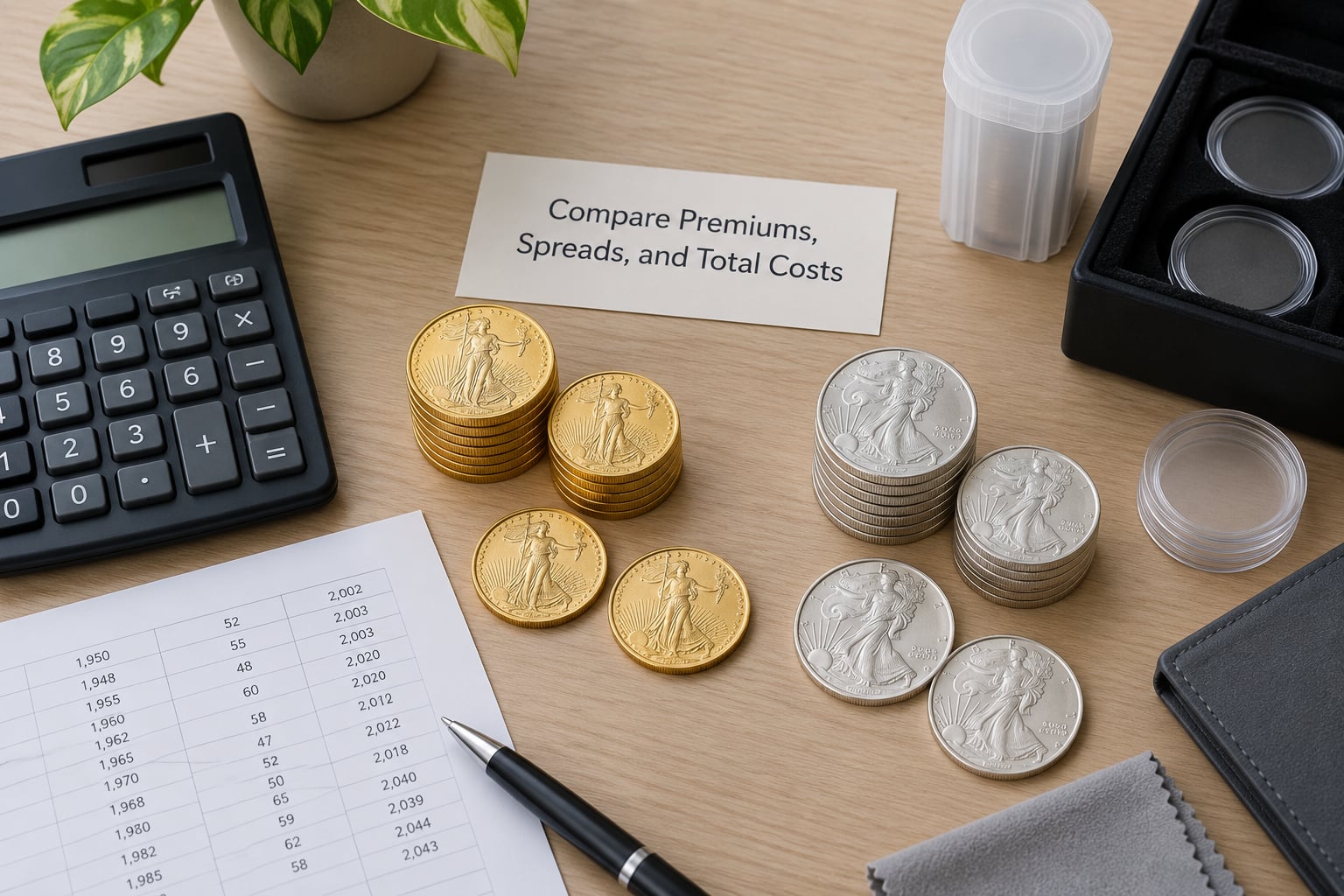
The premium over spot is the gap between the metal’s market price and what you actually pay. Sovereign coins carry the widest premiums because of their mint and their government guarantee. Generic rounds carry the narrowest. Bars usually sit between the two and are sold by weight, with the maker’s mark struck into the metal.
Add up everything before you buy: spot price times weight, plus the dealer premium, plus shipping and insurance, plus sales tax where it applies in your jurisdiction, plus storage, plus what the dealer will pay you when you sell. Dealers publish buyback terms; ask for them in writing and assume the resale price is lower than the retail price by more than you expect.
That resale gap is the number that decides whether physical metal is a reasonable holding for you. On a heavily promoted numismatic coin it can exceed a third of what you paid, because you are buying a collectible, not metal. Fund-based exposure replaces the premium with an annual expense ratio, usually well under one percent, and the trade is simply spread versus ongoing cost.
5. Buy From a Reputable Source
Compare sellers on published buyback terms, licensing and registration history, insured and tracked delivery, a clear return policy, and a record of independent customer reviews that are not all posted in the same week. A dealer whose only argument is scarcity or fear is telling you something about its incentives.
For fund-based exposure, check the fund’s own documents rather than the seller’s pitch. Physical-metal funds state whether they hold allocated metal, which bars and coins they use, the custodian, the expense ratio, and the tax treatment. Anything that will not answer those questions in writing is not worth the money.
Red flags are easy to spot once you look for them: celebrity-endorsed retirement accounts, pressure to roll over an existing account with a deadline attached, free-silver offers that lead to a sales call, collectible coins pushed as an investment with no melt value explanation, and anyone who will not state the buyback price before you buy.
6. Arrange Secure Storage and Documentation
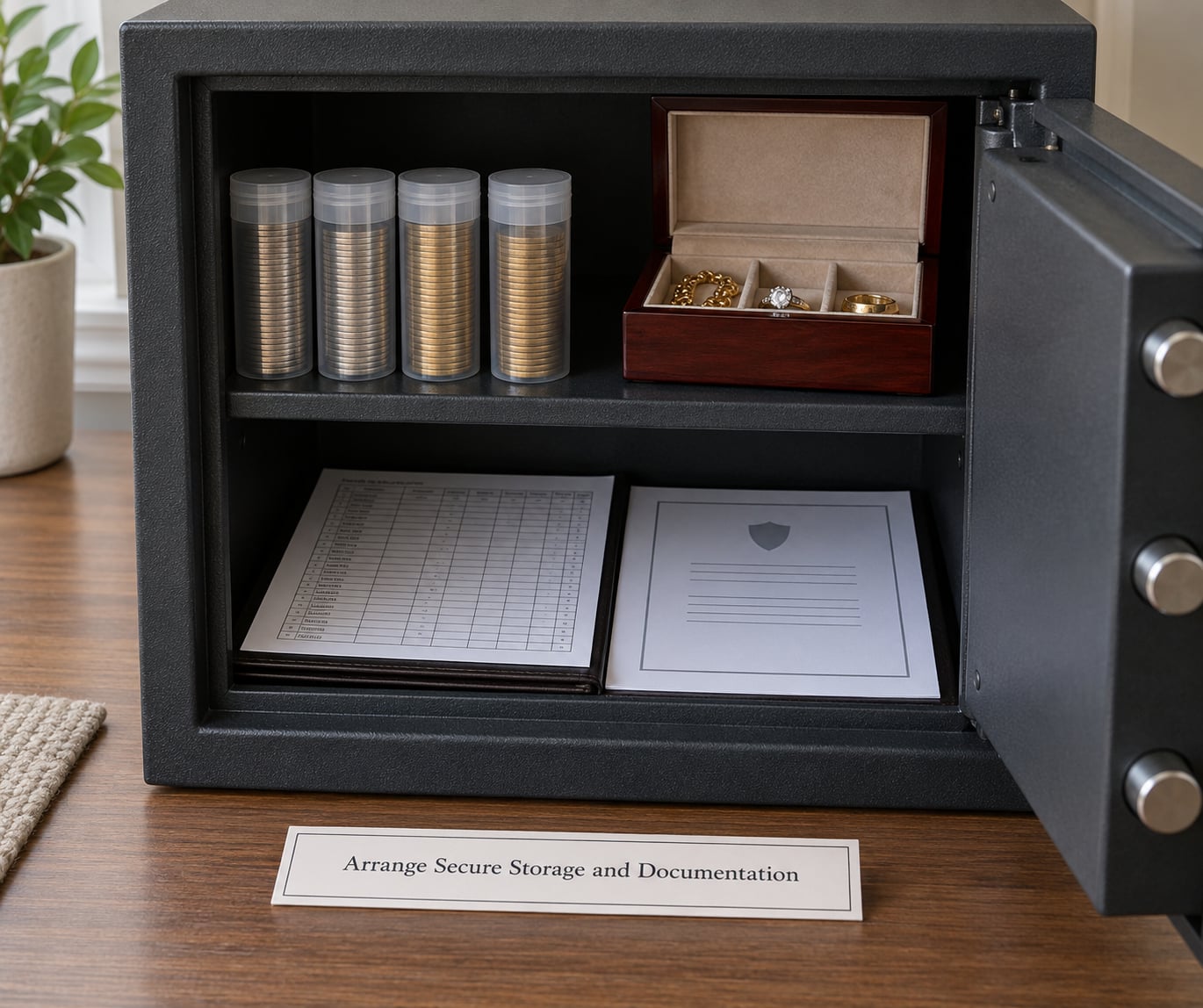
Home storage is cheapest and gives you instant access, but it puts the loss risk on your own insurance and makes you the one who checks whether the policy actually covers a safe inside the house. A bank deposit box adds a second lock and a third party, and the rental agreement may prohibit precious metals outright, so read it first. An insured third-party depository or private vault costs more per year and handles the claim process, and access is usually slower.
Whichever you pick, keep the paperwork: serial numbers for coins, weight and purity for bars, the invoice, the certificate if one came with a fund purchase, and dated photographs. Serial numbers are how a legitimate item is distinguished from a stolen one, and a photograph with a ruler in frame settles weight questions that otherwise turn into arguments.
Update your homeowner’s or renter’s coverage to name the safe or contents specifically, because a general policy can cap far below what the metal is worth. One dealer or insurer policy can cover bullion you hold outside the home, and it is cheaper than a rider added to a home policy.
7. Review and Rebalance the Portfolio
Set two dates. One annual check of storage, documents, insurance, and whether you can still explain every item you own. One rebalance review tied to a rule you wrote down beforehand, so a big price move does not become an emotional decision.
Two rules work well. Band rebalancing: when gold drifts more than a few percentage points above your target, sell back to the target. Ratio rebalancing: the gold-to-silver ratio, the number of ounces of silver it would take to buy the value of an ounce of gold, has moved well outside its long-run range, which tells you the two legs have drifted apart and one needs topping up.
Nothing else needs doing. A rising spot price is not a sell signal and a falling one is not a buy signal. If you cannot restate your reason for owning the position, that is the moment to trim it.
Common Mistakes
These are the errors that show up repeatedly in beginner threads, and each one has a simple fix.
- Buying before building the cash buffer. Metals fall in steps. Fund three to six months of expenses first, then buy.
- Concentrating in one volatile metal. All-in silver or all-in platinum magnifies both sides of the trade. Split across gold and silver or keep the speculative share small.
- Confusing collectibles with metal. Numismatic coins carry a premium that can collapse. If melt value does not dominate what you pay, you are buying a collectible.
- Paying the highest premium available. Compare premiums across two or three dealers on the same item before you order.
- Ignoring the resale spread. Ask what the dealer buys back for before you buy. If the answer is vague, walk away.
- Storing without records. Photographs, serial numbers, weight notes, and invoices are what make an insurance claim work.
- Chasing a price spike. Fixed monthly contributions remove most of this mistake by design.
- Assuming past performance continues. Metals have long flat stretches and violent rallies. A position sized for a decade is the hedge; a position sized for last quarter is a bet.
- Ignoring taxes. Physical gold, silver, platinum, and palladium held as investments are taxed differently from other assets in the United States, at a higher long-term capital gains rate with a one-year minimum holding period. Treatment in other countries differs again, so check the rules where you live.
The honest bear case belongs here too. Metals produce no income, they are more volatile than most bonds, and the premium and spread you pay at the start plus the storage and insurance you pay each year can quietly consume a decade of returns. Anyone arguing you should hold more than a small share is selling you something.
Frequently Asked Questions
Less than most people assume. A single low-premium silver round or a fraction of a low-cost physical gold fund gives you real exposure, and a recurring monthly contribution of a few dozen dollars does the same job over time. The figure that matters more is your target percentage of total investable assets, not the size of the first purchase.
Physical metal gives you ownership that no fund administrator can rehypothecate, plus crisis value you can reach without a broker. It also brings dealer premiums, a resale spread, storage cost and a record-keeping job. A physically backed fund is cheaper to hold, easier to rebalance and taxed more simply, but it depends on a custodian and the fund’s compliance. Many beginners end up with a small amount of each.
Between 5% and 10% of total investable assets is the range most long-term investors use, with the higher end for people who already hold a diversified stock and bond portfolio and want more currency insurance. If metals would be your main holding, use a much smaller number. Whichever figure you pick, decide it in advance and rebalance back to it rather than reacting to price moves.
Gold, because it is the most liquid, most widely available and the deepest market, which keeps premiums and spreads narrowest. Silver is more volatile and more industrial, platinum and palladium are thinner markets with wider spreads. Safest here means easiest to buy and sell at a fair price, not lowest risk, since every one of these metals can drop sharply. Start with gold, add silver later if you want something to rebalance against.
In the United States, physical gold, silver, platinum and palladium held as investments are collectibles, taxed at the 28% long-term capital gains rate with a one-year minimum holding period. Some physically backed funds are taxed differently, so read the prospectus. Retirement accounts such as a self-directed IRA can hold metal, but the rules on which products qualify and how distributions are taxed are strict and easy to get wrong.
Look for published buyback terms, licensing and registration history, insured and tracked delivery with signature confirmation, a written return policy, and customer reviews that span months rather than weeks. Ask what the dealer buys back for before you buy, and decline the sale if the answer is vague. Walk away from anyone using celebrity endorsements, deadline pressure or free-metal offers to start a sales conversation.
Conclusion
Starting a precious metals portfolio is a sizing problem before it is a shopping problem. Define the job, cap the position at a share of your portfolio you would not miss, choose the vehicle that matches the job, buy on a schedule, and document everything.
Start with the five things you can do tonight. Write the goal and time horizon, finish the emergency cash buffer, pick a target percentage and monthly contribution, work out the true all-in cost including the buyback spread and storage, and vet one supplier using published buyback terms and reviews that span months. Only then place the first order, and let the schedule do the rest.
Source: https://www.pgm-blog.com/how-to-start-a-precious-metals-portfolio/
Anyone can join.
Anyone can contribute.
Anyone can become informed about their world.
"United We Stand" Click Here To Create Your Personal Citizen Journalist Account Today, Be Sure To Invite Your Friends.
Before It’s News® is a community of individuals who report on what’s going on around them, from all around the world. Anyone can join. Anyone can contribute. Anyone can become informed about their world. "United We Stand" Click Here To Create Your Personal Citizen Journalist Account Today, Be Sure To Invite Your Friends.
LION'S MANE PRODUCT
Try Our Lion’s Mane WHOLE MIND Nootropic Blend 60 Capsules
Mushrooms are having a moment. One fabulous fungus in particular, lion’s mane, may help improve memory, depression and anxiety symptoms. They are also an excellent source of nutrients that show promise as a therapy for dementia, and other neurodegenerative diseases. If you’re living with anxiety or depression, you may be curious about all the therapy options out there — including the natural ones.Our Lion’s Mane WHOLE MIND Nootropic Blend has been formulated to utilize the potency of Lion’s mane but also include the benefits of four other Highly Beneficial Mushrooms. Synergistically, they work together to Build your health through improving cognitive function and immunity regardless of your age. Our Nootropic not only improves your Cognitive Function and Activates your Immune System, but it benefits growth of Essential Gut Flora, further enhancing your Vitality.

Our Formula includes: Lion’s Mane Mushrooms which Increase Brain Power through nerve growth, lessen anxiety, reduce depression, and improve concentration. Its an excellent adaptogen, promotes sleep and improves immunity. Shiitake Mushrooms which Fight cancer cells and infectious disease, boost the immune system, promotes brain function, and serves as a source of B vitamins. Maitake Mushrooms which regulate blood sugar levels of diabetics, reduce hypertension and boosts the immune system. Reishi Mushrooms which Fight inflammation, liver disease, fatigue, tumor growth and cancer. They Improve skin disorders and soothes digestive problems, stomach ulcers and leaky gut syndrome. Chaga Mushrooms which have anti-aging effects, boost immune function, improve stamina and athletic performance, even act as a natural aphrodisiac, fighting diabetes and improving liver function. Try Our Lion’s Mane WHOLE MIND Nootropic Blend 60 Capsules Today. Be 100% Satisfied or Receive a Full Money Back Guarantee. Order Yours Today by Following This Link.


| Visits: | 1,833,824,436 |
| Stories: | 8,714,683 |
Whistler Blowers, Insiders

